









































































































































Bad Cholesterol and How to Combat It: Evidence-Based Ways to Lower LDL
Author: RVLNSV PRASAD
Updated On: September 2026
About Us
Author Bio
Editorial Policy
Contact Us

Quick Answer
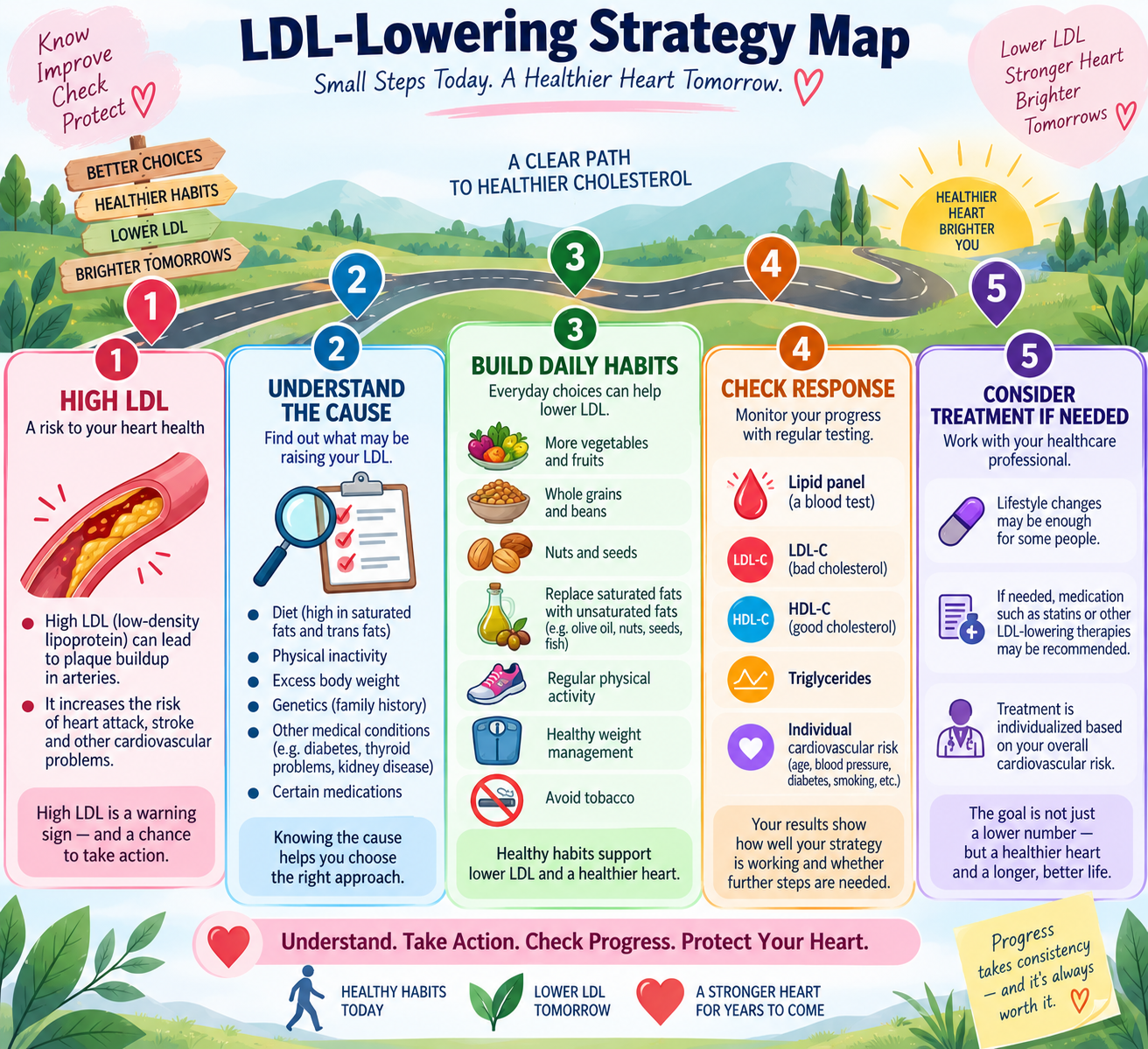
Bad cholesterol usually refers to low-density lipoprotein (LDL) cholesterol. When LDL-containing particles remain elevated over time, they can contribute to plaque buildup in artery walls and increase the risk of cardiovascular disease, including heart attack and stroke. The American Heart Association explains why LDL is commonly called “bad” cholesterol.
The most effective way to combat bad cholesterol is not a single food, drink, supplement, or exercise. A comprehensive approach includes appropriate cholesterol testing, a heart-healthy eating pattern, regular physical activity, avoiding tobacco, managing other cardiovascular risk factors, and using cholesterol-lowering medication when medically appropriate. The American Heart Association’s cholesterol treatment guidance explains how lifestyle changes and medical treatment can work together.
High LDL cholesterol usually causes no symptoms, so a person can feel completely healthy while having elevated LDL. A blood test is needed to measure cholesterol levels. MedlinePlus explains cholesterol testing and the different types of cholesterol and blood fats.
The latest 2026 ACC/AHA Guideline on the Management of Dyslipidemia emphasizes individualized cardiovascular-risk assessment, appropriate LDL-C and non-HDL-C goals, and additional risk markers such as lipoprotein(a) and apolipoprotein B in selected people. Read the 2026 guideline overview from the American Heart Association.
What Is Bad Cholesterol?
The phrase “bad cholesterol” is commonly used to describe LDL cholesterol.
LDL stands for low-density lipoprotein.
Technically, LDL is a lipoprotein particle that transports cholesterol through the bloodstream.
Cholesterol itself is not inherently harmful.
Your body needs cholesterol for important functions, including making hormones and vitamin D and supporting cell membranes. MedlinePlus explains the role of cholesterol and the differences between LDL and HDL.
The concern arises when excessive amounts of LDL-containing particles circulate in the blood over time.
These particles can contribute to plaque buildup within artery walls.
This process is known as atherosclerosis.
As plaque accumulates, arteries can become narrower and less flexible.
If blood flow to the heart becomes severely restricted or blocked, a heart attack can occur.
If blood flow to the brain becomes blocked, a stroke can occur.
The American Heart Association’s explanation of LDL and atherosclerosis provides more detail about how elevated cholesterol contributes to cardiovascular disease.
Does High LDL Cholesterol Cause Symptoms?
Usually, no.
This is one of the most important things readers should understand.
High LDL does not normally cause obvious symptoms that you can feel.
You cannot reliably determine your cholesterol level from:
- how energetic you feel
- whether you have headaches
- whether you feel tired
- whether you exercise regularly
- whether you have normal blood pressure
A person can have high LDL while feeling completely well.
The American Heart Association specifically notes that people may not feel symptoms of high LDL.
That is why a cholesterol blood test is important.
Chest pain and shortness of breath should not be described as symptoms of high cholesterol itself.
They can indicate cardiovascular disease or another medical problem and should be medically evaluated.
How Is Bad Cholesterol Measured?
A healthcare professional can order a lipid panel, sometimes called a lipid profile.
It commonly includes:
| Test | What it measures |
|---|---|
| LDL cholesterol | A major atherogenic cholesterol measure |
| HDL cholesterol | High-density lipoprotein cholesterol |
| Triglycerides | A major type of blood fat |
| Total cholesterol | Overall cholesterol measurement |
MedlinePlus explains what a lipid profile measures and how LDL, HDL, and triglycerides differ.
The 2026 guideline also recommends attention to additional risk markers in appropriate people.
One particularly important update is lipoprotein(a), or Lp(a).
The guideline recommends that adults have Lp(a) measured at least once to identify people who may have genetically influenced additional cardiovascular risk.
Another marker, apolipoprotein B (ApoB), may be useful in selected people, particularly when triglycerides are elevated or when standard lipid measurements may not completely reflect atherogenic particle burden.
What Causes High LDL Cholesterol?
High LDL does not have one universal cause.
Genetics, dietary habits, physical activity, body weight, medical conditions, and medications can all play a role.
1. Genetics
Some people inherit a tendency toward high LDL.
One important inherited condition is familial hypercholesterolemia (FH).
People with FH can have very high LDL from an early age.
A strong family history of very high cholesterol or premature heart disease therefore deserves medical attention.
The American Heart Association explains genetic and lifestyle factors that can raise LDL.
2. Diet
Diet can influence LDL.
One particularly important dietary factor is saturated fat.
Foods high in saturated fat can raise LDL cholesterol.
Examples include:
- fatty meats
- processed meats
- butter
- full-fat dairy products
- some packaged foods
- some deep-fried foods
The goal is not to eliminate all fat.
Instead, replace some saturated fats with healthier unsaturated fats.
The American Heart Association’s dietary guidance recommends a dietary pattern centered on vegetables, fruits, whole grains, beans, nuts, seeds, and healthier fats while limiting foods high in saturated fat.
3. Physical Inactivity
A sedentary lifestyle can contribute to an unfavorable cardiovascular risk profile.
Regular physical activity supports heart health and can help improve cholesterol levels.
The American Heart Association’s cholesterol guidance notes that physical activity can help lower LDL and raise HDL.
4. Excess Body Weight
Excess body weight can be associated with an unfavorable lipid profile.
For people who need to lose weight, gradual weight management can improve several cardiovascular risk factors.
But weight is not the entire story.
A person with a healthy body weight can still have high LDL because of genetics or another medical condition.
5. Other Health Conditions
Certain conditions can influence cholesterol.
These include:
- diabetes
- chronic kidney disease
- thyroid disorders
- inherited lipid disorders
Some medicines can also affect cholesterol.
How to Combat Bad Cholesterol
A practical strategy has several parts.
Know your numbers.
Get appropriate cholesterol testing.
Improve your eating pattern.
Emphasize high-fiber plant foods and healthier unsaturated fats.
Move regularly.
Choose activities you can maintain.
Manage other risk factors.
Pay attention to blood pressure, diabetes, tobacco exposure, and weight when relevant.
Use medication when indicated.
Some people need medication because lifestyle changes alone are not enough.
The 2026 ACC/AHA guideline recommends risk-based decision-making rather than treating every person with the same cholesterol target.
Foods That May Help Lower LDL Cholesterol
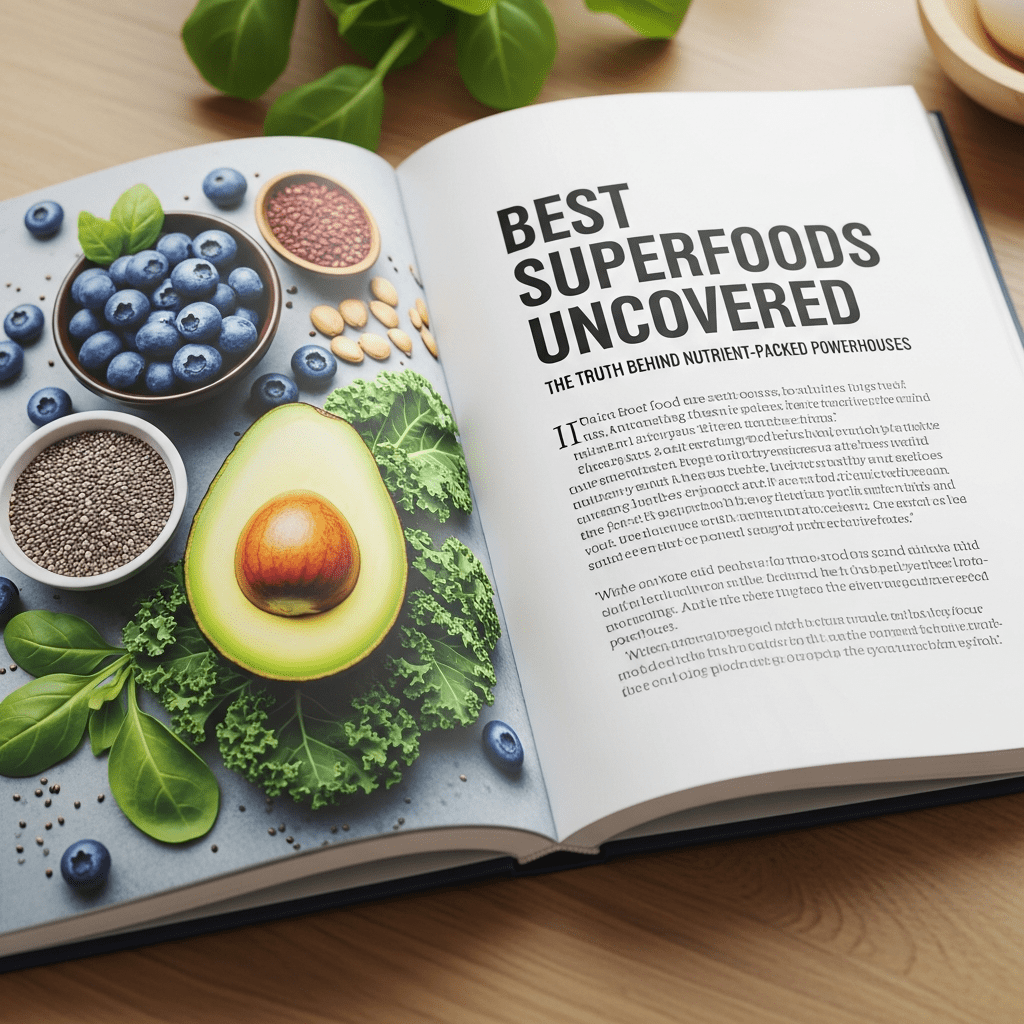
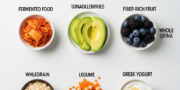
Instead of searching for one cholesterol-lowering “superfood,” focus on your overall eating pattern.
Oats and Barley
Oats and barley contain soluble fiber, including beta-glucan.
Adding them to meals can be an easy way to increase fiber intake.
Try:
- oatmeal
- overnight oats
- barley soup
- barley-based meals
Beans and Lentils
Beans, chickpeas, peas, and lentils provide fiber and plant protein.
They can also replace meals that would otherwise contain more saturated fat.
Practical examples include:
- dal
- rajma
- chickpea curry
- lentil soup
- bean salads
Nuts and Seeds
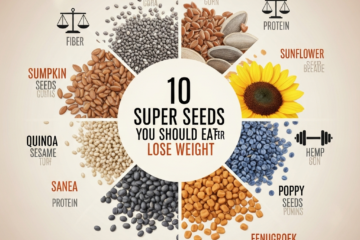
Nuts and seeds can fit into a heart-healthy eating pattern. Examples include almonds, walnuts, pistachios, flaxseed, and chia seeds. Portion size still matters because nuts and seeds are calorie-dense.
Vegetables and Fruits
Vegetables and fruits provide fiber and other nutrients. Choose variety rather than looking for one special fruit. Examples include apples, oranges, guava, berries, tomatoes, carrots, and leafy greens. The AHA’s 2026 patient guidance specifically encourages vegetables, fruits, whole grains, beans, nuts, seeds, unsaturated fats, and lean proteins as part of an overall healthy eating pattern.
Saturated Fat: A Key LDL Target
One of the most useful dietary concepts is understanding the difference between saturated fat and unsaturated fat. Rather than simply trying to eat “low-fat” foods, consider what type of fat you are eating and what replaces it. For example, you might replace some foods high in saturated fat with nuts, seeds, fish, legumes, and foods containing unsaturated vegetable oils. The American Heart Association’s dietary recommendations emphasize replacing saturated fats with healthier unsaturated fats within an overall healthy dietary pattern.
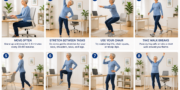
Easy Exercises People Often Overlook
You do not need a gym to become more physically active.
1. Ten-Minute Walking
Walk briskly for 10 minutes. If 30 minutes feels difficult, divide it into three shorter walks. This can make exercise easier to fit into a busy day.
2. Sit-to-Stand
Use a stable chair. Sit down, stand up, then sit down slowly. Repeat according to your ability.
3. Wall Push-Ups
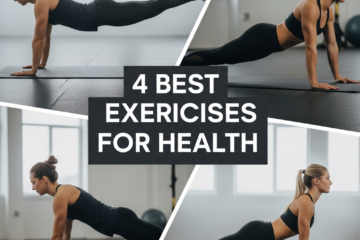
Stand facing a wall and place your hands against it. Bend your elbows, move toward the wall, and push back. This provides an easier starting point than a floor push-up.
4. Stair Walking
If stairs are safe for you, walk up and down for short periods. Hold a stable railing when necessary.
5. Walk During Phone Calls
Instead of automatically sitting during every phone call, walk around if it is safe. This turns otherwise sedentary time into movement.
6. Short Walks After Meals
A short walk after a meal is another simple way to add movement. The objective is not to create an exhausting workout. The objective is consistency. The American Heart Association recommends regular physical activity as part of cholesterol and cardiovascular-risk management.
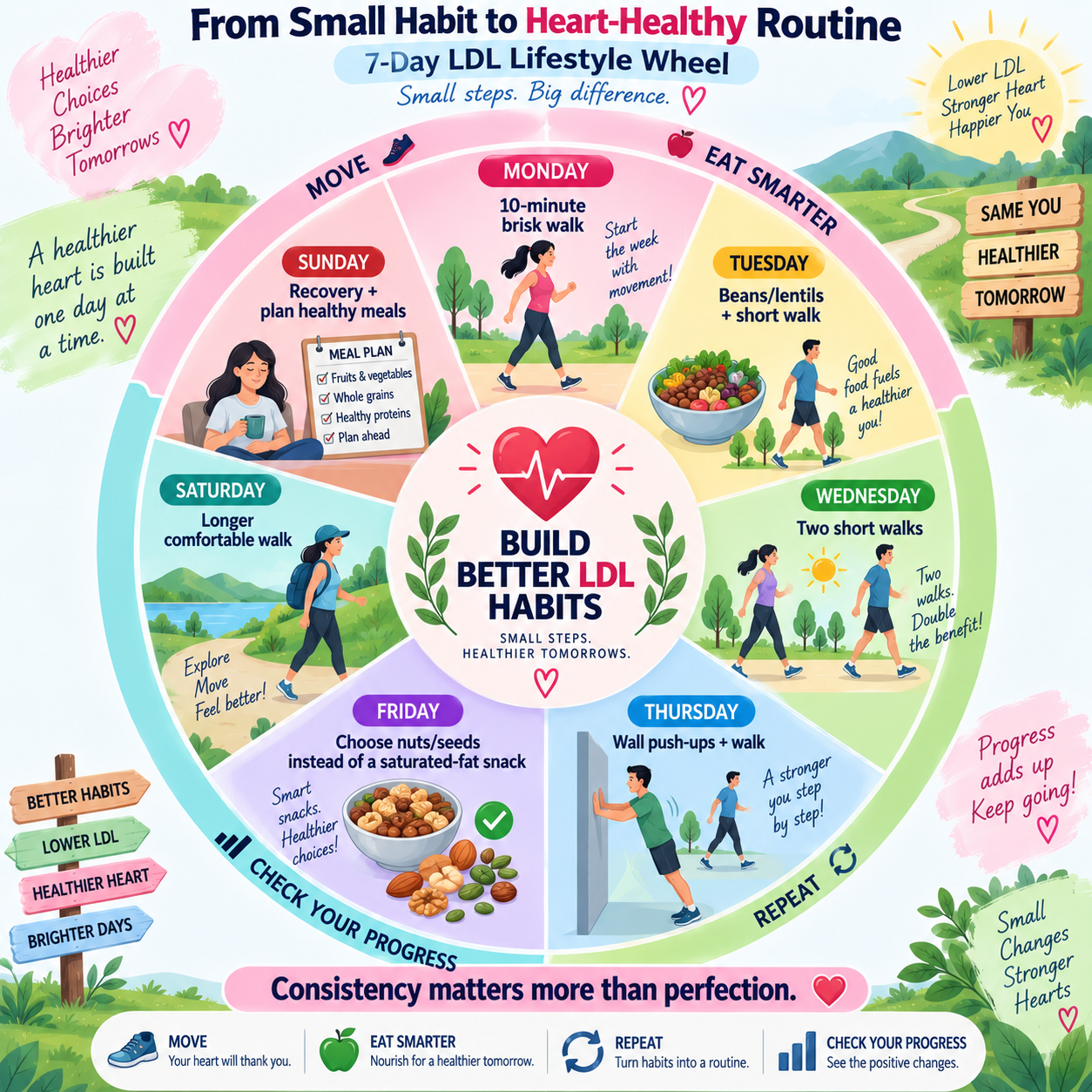
A Simple 7-Day Movement Plan
| Day | Easy Activity |
|---|---|
| Monday | 10-minute brisk walk |
| Tuesday | 10-minute walk + sit-to-stands |
| Wednesday | Two 10-minute walks |
| Thursday | Wall push-ups + 10-minute walk |
| Friday | 15-minute brisk walk |
| Saturday | 20-minute comfortable walk |
| Sunday | Gentle walking and recovery |
| Gradually increase activity according to your fitness level. The goal is not to “burn cholesterol.” The goal is to establish a sustainable movement habit. |
Can Losing Weight Lower Bad Cholesterol?
It can help, especially when excess weight contributes to an unfavorable metabolic profile. However, losing weight does not guarantee that LDL will become normal. Genetics can have a major influence. That is why a person can eat well, exercise, and maintain a healthy weight while still having high LDL. If LDL remains elevated despite healthy habits, talk with a healthcare professional rather than assuming you are doing something wrong.
Can Garlic Lower Bad Cholesterol?
Garlic is frequently promoted as a natural cholesterol cure. That description is too strong. Garlic can be part of a healthy diet, but it should not be presented as a replacement for evidence-based cholesterol treatment. The same principle applies to many supplements. A supplement may affect a laboratory measurement without having the same evidence as established medications for reducing cardiovascular events.
What About Green Tea?
Green tea contains biologically active compounds and has been studied for cardiovascular effects. However, drinking green tea should not be presented as a replacement for prescribed cholesterol treatment. If you enjoy it, it can be part of an overall healthy lifestyle. But “healthy beverage” and “proven cholesterol treatment” are not the same thing.
Is Lemon Water a Treatment for LDL?
No. Lemon water can be a refreshing way to drink more water. But it should not be presented as a proven treatment for high LDL cholesterol. This distinction is important because online health content frequently turns ordinary foods into exaggerated “cures.”
What About Plant Sterols?
Plant sterols and stanols have been studied for their effect on LDL cholesterol. They can modestly reduce LDL in some people. However, lowering a laboratory number does not automatically prove that every supplement prevents heart attacks or strokes. If you are considering concentrated plant-sterol supplements or fortified products, discuss them with your healthcare professional. This is especially important if you take medications or have other medical conditions.
LDL and Triglycerides Are Different
This LDL cholesterol and triglycerides are not the same thing. LDL is a lipoprotein that carries cholesterol. Triglycerides are another type of fat found in the blood. A person can have high LDL, high triglycerides, low HDL, or several of these abnormalities together. A lipid panel helps provide a broader picture. MedlinePlus explains the components of a lipid profile, including LDL, HDL, triglycerides, and total cholesterol.
What Is New in the 2026 Cholesterol Guideline?
This is an important update for anyone reading older cholesterol articles. The 2026 ACC/AHA Guideline on the Management of Dyslipidemia replaced the 2018 cholesterol guideline. It reflects evidence available through late 2024 and expands the focus beyond LDL alone to other atherogenic lipoproteins and cardiovascular risk. Read the current guideline overview directly from the American Heart Association.
Important changes include:
- use of PREVENT-ASCVD equations for appropriate primary prevention
- return of LDL-C and non-HDL-C treatment goals
- continued emphasis on percentage LDL reduction
- Lp(a) measurement at least once during adulthood
- selective ApoB testing
- expanded use of coronary artery calcium scoring in selected people
- earlier attention to prolonged exposure to atherogenic lipoproteins
The guideline also emphasizes lifestyle optimization and individualized treatment.
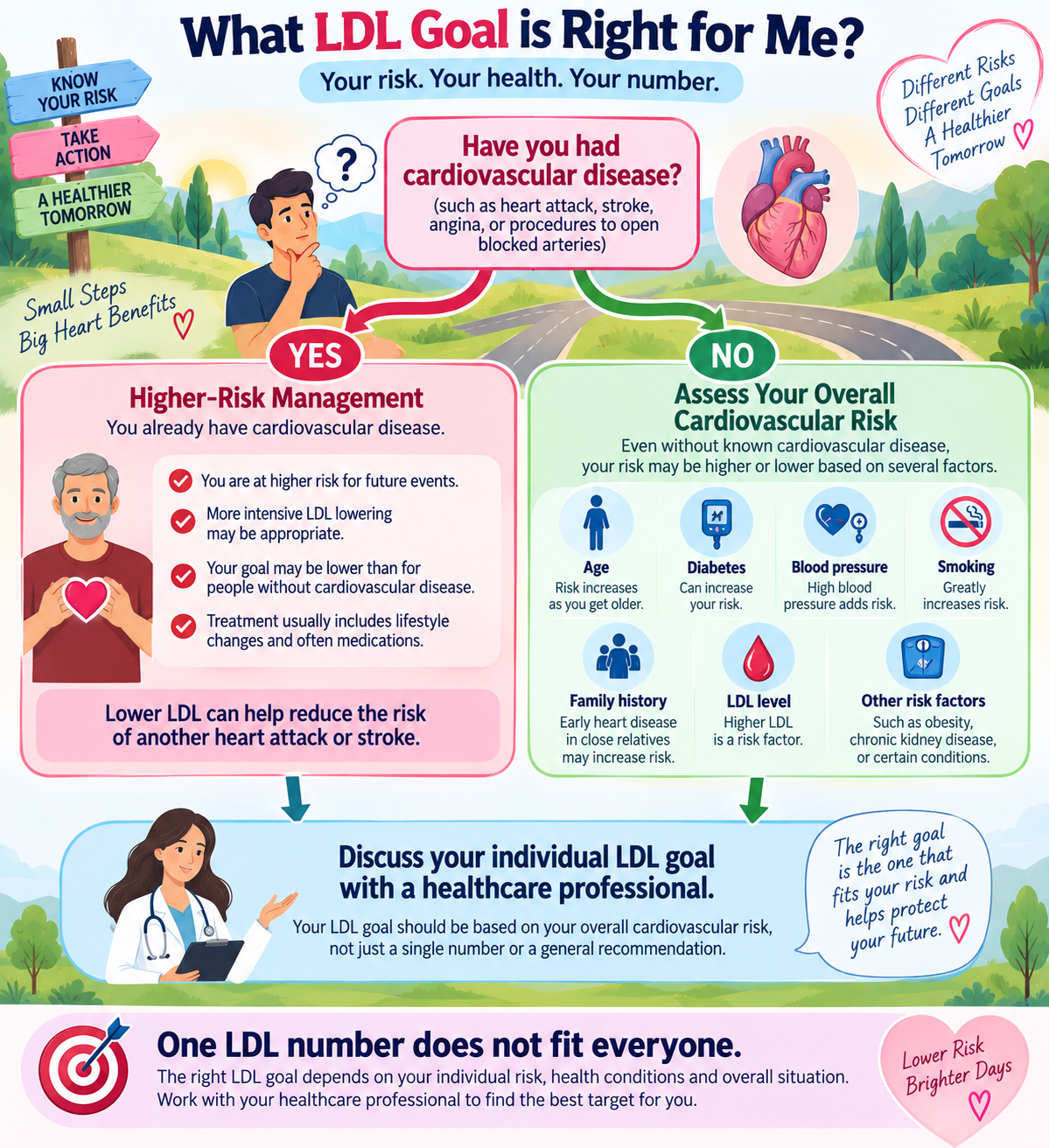
Why There Is No Single Perfect LDL Number
One of the biggest mistakes in cholesterol articles is presenting one LDL number as universally appropriate. That is too simplistic. The appropriate LDL goal depends on the person’s cardiovascular risk. The American Heart Association explains that LDL goals can differ depending on factors such as age, health history, diabetes, family history, and previous cardiovascular disease. The 2026 guideline further formalizes risk-based LDL-C and non-HDL-C goals. Therefore:
Do not compare your LDL target with someone else’s.
When Is Cholesterol Medication Needed?
Lifestyle changes are important, but lifestyle changes are not always enough. Medication may be recommended depending on LDL level, previous heart attack or stroke, diabetes, blood pressure, smoking, family history, age, cardiovascular risk, and inherited cholesterol disorders. Statins remain an important foundation of cholesterol-lowering therapy when medication is indicated. The American Heart Association explains that cholesterol-lowering medicines may be needed when lifestyle changes alone are not sufficient. The updated 2026 guideline also provides more detailed risk-based treatment recommendations. Never stop a prescribed statin or other cholesterol medication without speaking with the prescribing healthcare professional.
Common Mistakes When Trying to Lower Bad Cholesterol
Mistake 1: Waiting for Symptoms
High LDL usually causes no symptoms. Better: get appropriate cholesterol testing.
Mistake 2: Looking Only at Total Cholesterol
Total cholesterol does not tell the entire story. Better: discuss LDL, HDL, triglycerides, and other relevant risk markers.
Mistake 3: Searching for One Superfood
No single food can replace a healthy dietary pattern. Better: improve the overall pattern.
Mistake 4: Thinking Exercise Cancels an Unhealthy Diet
Exercise is valuable, but it does not make a diet high in saturated fat harmless. Better: combine regular movement with healthier food choices.
Mistake 5: Replacing Medication With Supplements
A supplement is not automatically equivalent to a prescription treatment. Better: discuss supplements with a healthcare professional.
Mistake 6: Assuming Natural Means Safe
Natural products can have side effects and interactions. Better: evaluate supplements carefully.
Mistake 7: Ignoring Family History
Very high LDL can have an inherited cause. Better: tell your healthcare professional about premature cardiovascular disease or severe cholesterol problems in your family.
Mistake 8: Following an Extreme Diet
Highly restrictive diets may be difficult to maintain. Better: make smaller changes that you can continue for years.
People-First Insight: Make Healthy Choices Easier
Health advice often sounds simple: “Exercise more.” “Eat healthier.” “Reduce saturated fat.” But everyday life is rarely that simple. People work. People care for families. People travel, have different budgets, and may not always have access to gyms or convenient exercise facilities. That is why reducing friction can be more useful than creating a perfect plan.
Instead of “Exercise for one hour every day,” try “Walk for 10 minutes after lunch.”
>Instead of “Completely change your diet,” try “Add beans or vegetables to one meal today.”
>Instead of “Never eat unhealthy food again,” try “Replace one high-saturated-fat food with a healthier option.”
Small changes are easier to repeat. Repeated habits are more valuable than a perfect plan that lasts three days.
My Personal Experience and Perspective
One thing I have noticed when people talk about cholesterol is how often elevated cholesterol is discovered unexpectedly. Someone may feel completely healthy. They may have no warning signs. Then a routine blood test reveals elevated LDL. That can be surprising. It also shows why waiting until you feel unwell is not a reliable cholesterol strategy.
/>Another common pattern is searching for one special food. First it may be garlic. First it may be garlic, followed by lemon water, green tea, or a particular seed that is promoted as a solution. The more useful question is, what combination of habits can I realistically maintain for years?
That change in thinking—from searching for a miracle to building sustainable habits—is one of the most practical ways to approach cholesterol management.
This is a personal perspective, not clinical evidence or individualized medical advice.
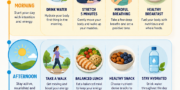
A Simple Daily Routine for Better Cholesterol Habits
Morning
Choose a breakfast containing a high-fiber food such as oats or another whole grain. Add fruit if appropriate.
During Work
Stand up regularly. Walk for a few minutes when possible.
Lunch
Include vegetables and a source of beans, lentils, fish or another suitable protein.
Afternoon
Take a short walking break.
Evening
Walk for 10–20 minutes if appropriate. Add simple strength exercises several times per week.
Weekly
Work toward the recommended physical-activity target. Review your overall eating pattern rather than judging one meal.
Medical Care
Take prescribed medication as directed. Follow your healthcare professional’s recommendations for repeat cholesterol testing.
How Long Does It Take to Lower LDL?
There is no single timeline that applies to everyone. Dietary changes, physical activity, weight changes, and medication can affect LDL differently from person to person. Your healthcare professional may recommend repeat testing after an appropriate period to see how your numbers respond. Do not expect a major change after just a few days. More importantly, do not judge your long-term cardiovascular risk based on one cholesterol measurement.
When Should You Talk to a Doctor?
Speak with a healthcare professional if:
- Your LDL is elevated
- Your cholesterol remains high on repeated testing
- You have diabetes
- You have kidney disease
- You have a thyroid condition
- You have a strong family history of premature heart disease
- You have been told that your LDL is very high
- You have had a heart attack or stroke
- You are considering cholesterol medication
- You want to stop cholesterol medication
- You are considering supplements for cholesterol
The American Heart Association recommends discussing your LDL level and individual cardiovascular risk with a healthcare professional.
Remember that symptoms such as severe chest pain, sudden weakness, facial drooping, or difficulty speaking can indicate a medical emergency. Do not assume such symptoms are simply “high cholesterol.” Seek urgent medical care.
Frequently Asked Questions
What is bad cholesterol?
Bad cholesterol is a common term for LDL cholesterol. When LDL-containing particles remain elevated, they can contribute to plaque buildup in arteries.
How can I lower bad cholesterol naturally?
A heart-healthy eating pattern, regular physical activity, appropriate weight management, and avoiding tobacco can help. Some people also need medication.
What foods lower LDL cholesterol?
Foods containing soluble fiber, such as oats, barley, and beans, can be useful. Vegetables, fruits, whole grains, nuts, seeds and foods rich in unsaturated fats can also fit into a heart-healthy diet. The American Heart Association provides detailed dietary guidance here.
What are the symptoms of high LDL?
Usually there are none. A blood test is needed to measure cholesterol.
Can exercise lower bad cholesterol?
Regular physical activity can improve cholesterol and cardiovascular health. The AHA recommends regular physical activity as part of a heart-healthy lifestyle.
Are LDL and triglycerides the same?
No. They are different types of blood lipids and are commonly measured together in a lipid panel.
Can I lower LDL without medication?
Some people can improve LDL substantially through lifestyle changes. Others need medication because of their LDL level, inherited risk, or overall cardiovascular risk.
Can garlic replace statins?
No. Garlic should not be presented as a replacement for prescribed cholesterol-lowering medication.
Does lemon water lower LDL?
There is no established evidence that lemon water should be considered a treatment for high LDL.
Should I stop statins if my cholesterol improves?
No. Do not stop prescribed medication without discussing it with your healthcare professional.
How often should cholesterol be checked?
The appropriate interval depends on your age, risk factors, family history, and previous cholesterol results. Your healthcare professional can determine the appropriate schedule.
Author Note
I created this guide to explain bad cholesterol and how to combat it in a practical and evidence-based way. The purpose is not to promote a miracle food, supplement, or exercise. It is to help readers understand LDL cholesterol, recognize why testing matters, identify sustainable lifestyle strategies, and understand when professional medical treatment may be appropriate. Health information should help people make better decisions without creating false confidence.
Author: RVLNSV PRASAD
Medical Disclaimer
This article is provided for general educational and informational purposes only. It is not a diagnosis, individualized treatment plan, or substitute for professional medical advice. Cholesterol goals and treatment decisions depend on factors including LDL level, age, cardiovascular history, diabetes, blood pressure, smoking, family history, inherited conditions, and overall cardiovascular risk. Do not start, stop, or change prescription medication based solely on this article. If you have high cholesterol, discuss your results with a qualified healthcare professional. Seek urgent medical attention for symptoms that may indicate a heart attack, stroke, or another medical emergency.
Fitness Disclaimer
The exercises described here are general examples for generally healthy adults. They are not individualized exercise prescriptions. If you have cardiovascular disease, uncontrolled blood pressure, significant joint problems, dizziness, chest pain, unusual shortness of breath, or another medical condition, speak with a healthcare professional before beginning a new exercise program. Start gradually and choose activities appropriate for your fitness level.
Conclusion
Bad cholesterol and how to combat it is not really about finding one magic food. It is about understanding LDL cholesterol and reducing long-term cardiovascular risk. High LDL can contribute to plaque buildup in arteries, yet high cholesterol usually produces no obvious symptoms. That makes appropriate cholesterol testing important.
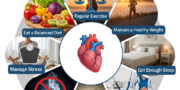
A practical approach includes eating more vegetables, fruits, whole grains, beans, nuts, and seeds; replacing saturated fats with healthier unsaturated fats; staying physically active; avoiding tobacco; managing weight when appropriate; and addressing conditions such as diabetes and high blood pressure.
Some people can improve their cholesterol substantially through lifestyle changes. Others need medication. Needing medication does not mean lifestyle changes have failed. It means the treatment strategy should match the person’s cardiovascular risk.
The 2026 ACC/AHA dyslipidemia guideline emphasizes earlier attention to atherogenic lipoproteins, individualized risk assessment, LDL-C and non-HDL-C goals, Lp(a) testing, selective ApoB testing, and evidence-based lipid-lowering treatment. Read the current guideline directly from the American Heart Association.
The most useful cholesterol strategy is simple: Know your numbers. Understand your risk. Build sustainable habits. Get professional guidance when you need it.
Small changes repeated consistently can become an important part of long-term heart health.
Sources
- American Heart Association—LDL, HDL and Triglycerides
- American Heart Association — Prevention and Treatment of High Cholesterol
- American Heart Association — 2026 Guideline on the Management of Dyslipidemia
- American Heart Association — 2026 Dyslipidemia Guideline: Top Things to Know
- American Heart Association — Diet and Lifestyle Recommendations
- American Heart Association — Cholesterol-Lowering Medications
- American Heart Association — Understanding Cholesterol and Lipids
- MedlinePlus — Cholesterol
- MedlinePlus — Lipid Panel
- World Health Organization — Cardiovascular Diseases
- American Heart Association — Physical Activity Recommendations
- PubMed — Phytosterols and LDL Cholesterol Research
- National Heart, Lung, and Blood Institute — High Blood Cholesterol
- CDC—About Cholesterol
Related Articles
Best 7 Health Benefits Of Exercise
- 222 Method Metabolism For Weight Loss
- 10 Best Foods To Control Blood Sugar Levels
- 7 Ways To Keep Your Heart Healthy
- 7 Simple Health Changes to Reduce The Risk of Chronic Disease
- Home




[…] Bad Cholesterol and How to Combat It […]